
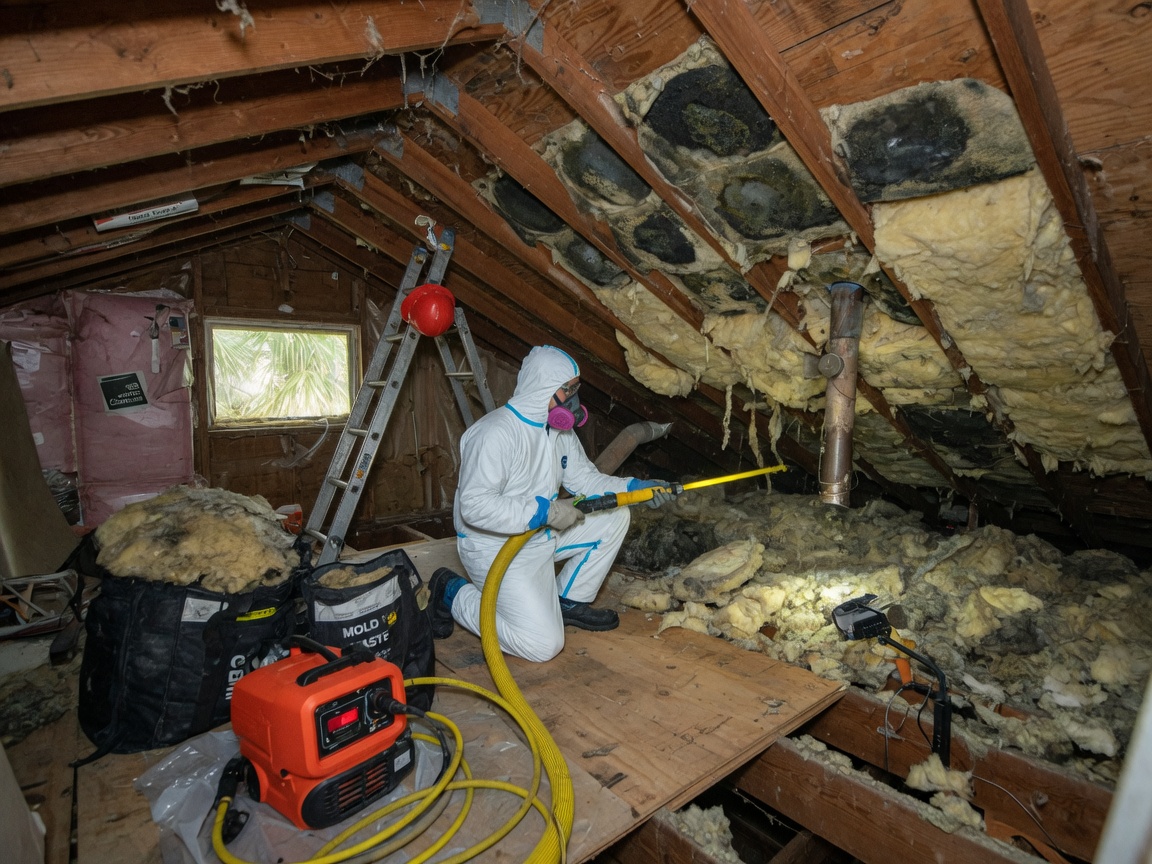
Palm Coast multifamily buildings in Palm Harbor and Indian Trails often feature shared attic spaces over townhomes and low-rise apartments built from the 1980s onward. These attics trap moisture from the region's hot summers and mild winters, allowing mold to spread along shared rafters and insulation. Remediation crews must isolate each unit's air space while treating common ventilation runs that connect multiple residences.
Matanzas Woods properties sit closer to the intracoastal, where salt air and periodic heavy rains accelerate roof deck deterioration. In these multifamily structures, crews encounter aged fiberglass batts that have absorbed water from minor leaks at plumbing vents or ridge lines. Removal requires negative-air machines staged on the ground to avoid disturbing downstairs residents while HEPA-filtered air is exhausted away from occupied balconies.
Flagler County multifamily codes require proper attic ventilation ratios that many older complexes no longer meet. During remediation, technicians frequently discover blocked soffit vents covered by insulation or painted shut during past re-roofing. Restoring airflow after mold removal prevents recurrence without triggering full roof replacement on buildings near Washington Oaks Gardens State Park or along routes to Flagler Beach.
Work in Palm Coast multifamily attics demands coordination with property managers to schedule around tenant turnover. Crews use containment tunnels that run from exterior access points through common hallways, keeping spores out of living spaces below. Post-remediation verification includes moisture readings on shared ceiling joists and documentation for insurance carriers serving properties between Daytona Beach and St. Augustine.
Technician insight
In Palm Coast the thing that catches most people out with multifamily attic mold remediation is how quickly moisture travels along shared ridge boards between units in Palm Harbor and Indian Trails. One leaking plumbing vent can seed growth across three or four residences before anyone notices because the attics are continuous. The humid subtropical summers keep wood damp long enough for colonies to establish deep in the insulation layers.
Matanzas Woods Townhome Attic Spread
Mold appeared in ceilings of two adjacent townhomes after a roof vent leak during summer rains. Inspection showed continuous growth along the shared ridge board connecting four units. Crews staged equipment outside, contained the attic sections, removed insulation, treated surfaces, and restored ventilation. Moisture readings stayed below 12 percent on follow-up visits.
Multifamily Attic Mold Remediation Services We Offer
✓Condo Attic Mold Containment
Installs sealed barriers and negative pressure zones in shared attic spaces above individual condo units to prevent cross-contamination between neighboring residences.
✓Apartment Building Insulation Removal
Extracts mold-affected fiberglass or cellulose from multifamily attics while protecting downstairs units from dust and spores during the process.
✓Multifamily Ventilation Restoration
Clears blocked soffit and ridge vents in Palm Coast apartment complexes to restore proper airflow after mold colonies are eliminated.
✓Shared Attic Moisture Mapping
Uses thermal imaging and pin meters across connected attic sections in Palm Harbor and Matanzas Woods buildings to locate hidden water intrusion points.
✓Tenant-Safe Mold Remediation
Schedules work around occupied units with ground-level equipment staging to minimize disruption for residents in Flagler County multifamily properties.
Multifamily Attic Mold Remediation Cost in Palm Coast, FL
| Service | Typical Range | What Affects It |
|---|---|---|
| Two-unit condo attic remediation | $2,800–$4,200 | Price rises with insulation volume and extent of roof deck staining |
| Three-to-four unit apartment attic treatment | $4,500–$7,500 | Higher when common ventilation runs require full clearing |
| Additional unit add-on | $900–$1,400 | Per extra residence sharing the same attic space |
| Ventilation restoration only | $650–$1,100 | When mold is limited and only airflow correction is needed |
Ranges are typical for Palm Coast, FL and confirmed with an exact written quote before any work starts.
How it works
- 1
Initial Assessment
Technicians access the multifamily attic from exterior points and document visible growth, moisture levels, and ventilation conditions across connected units.
- 2
Containment Setup
Plastic barriers and negative-air machines isolate the work zone from living spaces below while protecting adjacent residences.
- 3
Material Removal
Mold-affected insulation and affected wood surfaces are removed and bagged for disposal before antimicrobial treatment begins.
- 4
Ventilation Correction
Soffit and ridge vents are cleared or upgraded to address the humid subtropical conditions common in Palm Coast.
- 5
Verification and Clearance
Post-treatment moisture readings and visual inspection confirm the attic meets dry standards before barriers are removed.
Pricing
Multifamily attic mold remediation costs vary with the number of connected units and extent of shared insulation replacement.