
2026-09-17 ·
Attic Mold After a Roof Leak: What Palm Coast Homeowners Should Do Next
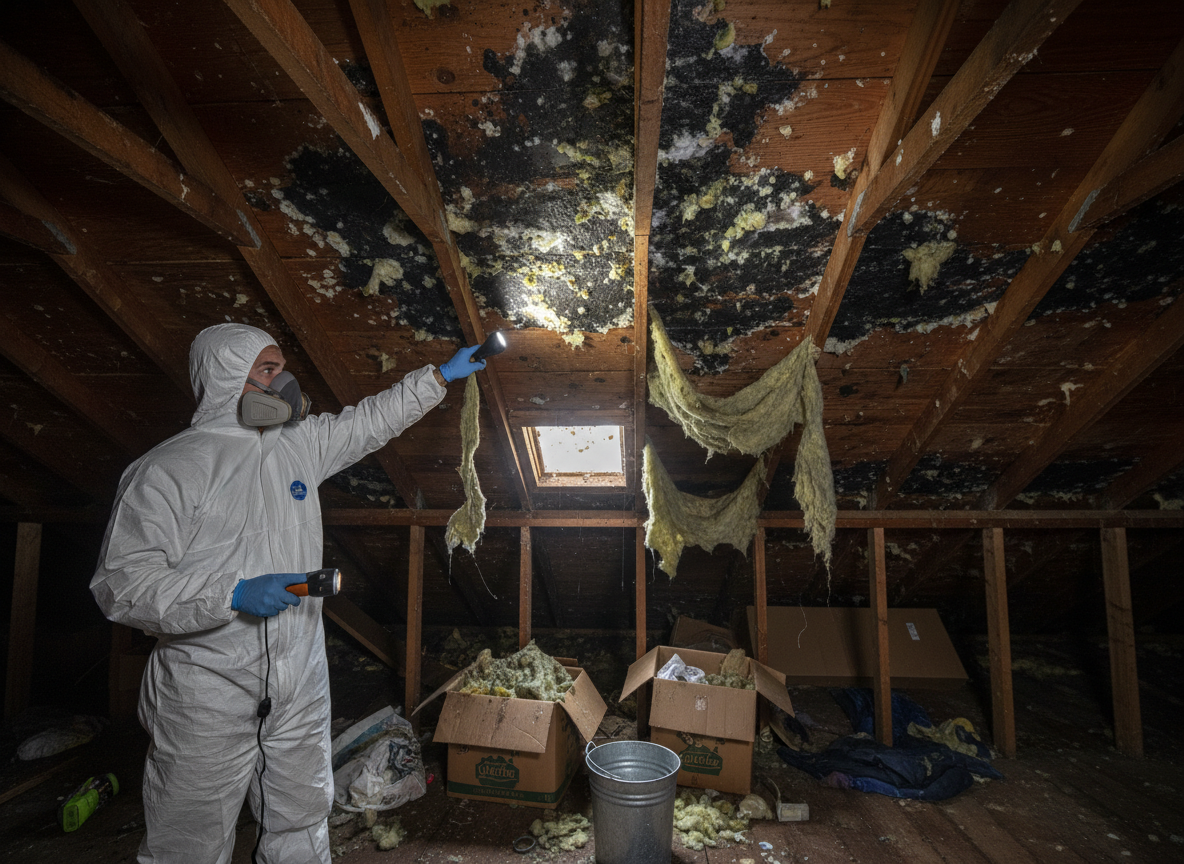
When attic mold develops after a roof leak in Palm Coast, the first action is to stop the water entry, then arrange professional attic mold remediation focused on the affected materials. Delaying allows spores to spread through rafters and insulation, especially during hot, humid summers that keep moisture levels elevated in Flagler County attics. Mild winters do little to dry out hidden pockets, so early intervention limits the scope of work in neighborhoods such as Palm Harbor and Indian Trails.
Stop the Water Intrusion First
Locate the exact roof penetration before any mold work begins. Common entry points include damaged flashing around vents or valleys, which lets rainwater reach sheathing and rafters. In Palm Coast homes near Washington Oaks Gardens State Park or Flagler Beach, salt air accelerates shingle wear, making leaks more frequent. Homeowners should hire a roofer familiar with local wind-driven rain patterns rather than attempting temporary patches that fail during afternoon storms. Once the leak is sealed, ventilation checks become possible without ongoing moisture feeding new growth. This sequence prevents repeat issues that appear in Matanzas Woods properties where tree cover shades roofs and slows drying.
Inspect and Test the Affected Attic
A thorough visual inspection reveals the extent of discoloration on sheathing and rafters. Moisture meters confirm active dampness that humidity alone cannot explain in Flagler County's climate. Professional testing identifies whether mold has migrated into insulation layers, which must be removed entirely to break the contamination cycle. Homeowners in Palm Harbor often discover hidden pockets behind bathroom exhaust vents that were never properly ducted outside. Comparing findings against the article What Causes Attic Mold in Palm Coast Homes? helps clarify whether poor ventilation or the recent leak is the dominant factor. Documentation at this stage supports any future insurance or real-estate discussions.
Remove Mold-Contaminated Insulation and Sheathing
Contaminated fiberglass or cellulose insulation requires full removal to eliminate spore reservoirs. Rafters and roof sheathing then receive targeted cleaning and, when necessary, replacement of softened sections. The service Attic Mold Cleanup After Roof Leaks follows containment protocols that keep particles from entering living spaces below. In Indian Trails homes with vaulted ceilings, crews must work around limited access points while protecting HVAC returns. Roof Sheathing & Rafter Mold Removal addresses structural wood that remains after insulation is gone. Work proceeds section by section so the attic can be cleared without spreading debris into adjacent areas.
Improve Ventilation to Prevent Recurrence
Once surfaces are clean, restoring airflow stops condensation that thrives in Palm Coast's hot summers. Ridge and soffit vents sized for the attic volume allow moist air to escape before it settles on cool sheathing. Homes near Daytona Beach or St. Augustine often need additional gable vents when tree cover blocks prevailing breezes. Proper bathroom fan ducting to the exterior, rather than into the attic, eliminates another common moisture source. Checking these details after remediation reduces the chance of new growth during mild winters when indoor heating creates temperature differentials. The related guide Attic Mold Found During a Home Inspection outlines how these upgrades satisfy buyer concerns in Flagler County transactions.