
2026-09-17 ·
What Causes Attic Mold in Palm Coast Homes?
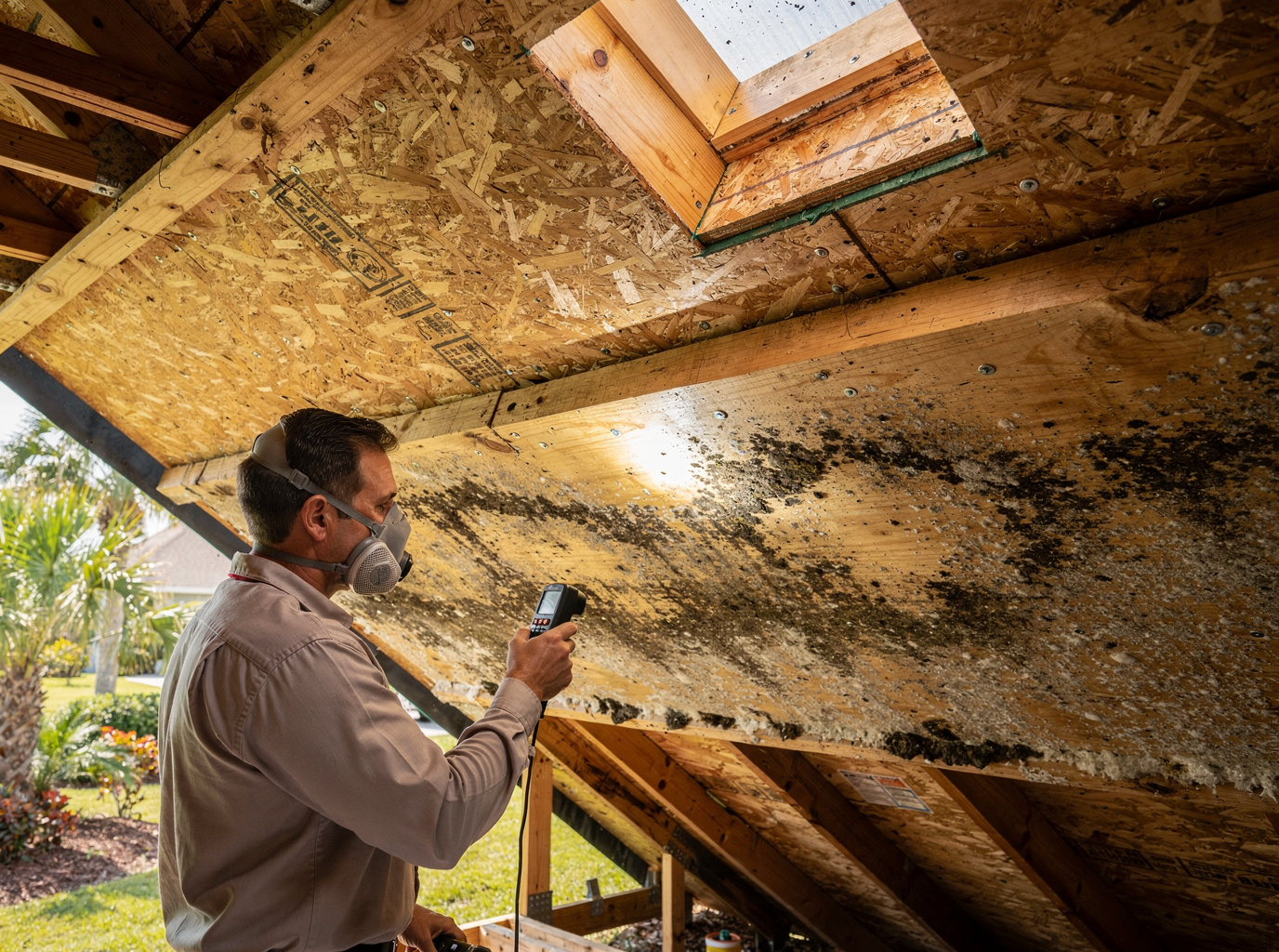
Attic mold in Palm Coast homes stems primarily from excess moisture created by the humid subtropical climate interacting with roof leaks, inadequate ventilation, and condensation during hot summers and mild winters.
Humidity and Climate Drivers in Flagler County
Palm Coast sits in a humid subtropical zone where summer dew points often stay above 70 degrees and winter temperatures rarely drop below freezing. This pattern allows moisture to linger in attics longer than in drier regions near Daytona Beach or St. Augustine. Homes in Palm Harbor and Indian Trails, many built between the 1980s and early 2000s with standard asphalt-shingle roofs, trap humid air when soffit and ridge vents are undersized or blocked by insulation. The result is consistent relative humidity levels above 60 percent that feed mold on roof sheathing and rafters. Can Florida Humidity Cause Mold in an Attic? explains how these seasonal swings differ from inland conditions.
Roof Leaks and Storm Damage Common to Local Housing
Flagler County sees frequent afternoon thunderstorms and occasional hurricanes that drive wind-driven rain under shingles. In neighborhoods such as Matanzas Woods, older roofs on single-story ranch homes often develop leaks around plumbing vents and skylights after 10–15 years. Water enters the attic, soaks insulation, and creates dark, damp pockets where mold colonies expand within weeks. Even minor leaks from tree branches or nail pops allow enough moisture for growth because the mild winters never fully dry the space. Attic Mold After a Roof Leak: What Palm Coast Homeowners Should Do Next outlines the sequence of damage seen after these events. Attic Mold After a Hurricane or Severe Storm covers the added volume of water that enters during named storms.
Ventilation Shortfalls and Bathroom Exhaust Issues
Many Palm Coast attics lack balanced intake and exhaust because original builders used minimal soffit venting on homes set among pine trees and live oaks. Bathroom fans in Indian Trails and Matanzas Woods frequently terminate inside the attic instead of routing to the exterior, dumping warm, moist air directly onto rafters. This creates condensation on cooler roof decking during overnight temperature drops, even in winter. The resulting damp film supports mold on oriented-strand board sheathing within 2–3 years. Attic Mold From Poor Ventilation and Condensation details how these installation shortcuts interact with local humidity levels.
Condensation Patterns in Typical Palm Coast Construction
Single-story homes with vaulted ceilings common in Palm Harbor trap rising warm air against the roof deck. When exterior temperatures fall to the mid-50s on winter nights, the temperature differential produces surface condensation that soaks insulation and wood. Because the ground in Flagler County stays moist year-round, crawl-space humidity also migrates upward through ceiling penetrations. These steady moisture sources allow mold to recur unless the underlying ventilation and leak issues are corrected first.